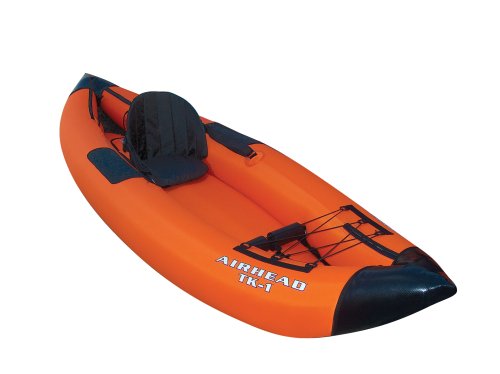
How to Choose an Airhead Inflatable Kayak
Start with the number of paddlers and the total weight of people, clothing, water, food, safety equipment, and other gear. A solo kayak and a two-person kayak have different handling and loading needs, so compare the stated capacity and usable space rather than assuming the largest-looking boat carries the most.
Inflatable construction makes transport and storage easier, but setup becomes part of every outing. Check the included valves, pump connection, seats, footrests, floor, and air chambers before leaving home. Inflate to the current instructions, inspect seams and fittings, and carry the repair materials recommended for the model.
Match the kayak to the water you actually plan to paddle. Calm lakes, slow rivers, coastal water, and moving or whitewater conditions create different demands. Check local launch rules, weather, wind, current, water temperature, and your own experience. Wear a properly fitted personal flotation device and never treat an inflatable kayak as automatically suitable for conditions outside the manufacturer's guidance.
Comfort affects how far you can paddle. Compare seat adjustment, back support, legroom, cockpit or open-deck layout, footrests, grab handles, and storage access. If two people will share the boat, consider how their combined size, paddling rhythm, and gear placement will affect trim and control.
Plan for care after every use. Rinse away salt, sand, mud, and plant material; dry the kayak fully before long-term storage; protect it from prolonged heat and sharp objects; and inspect it before the next launch. Store the boat, seats, pump, and repair kit where the materials will not be crushed or exposed to avoidable moisture.
For additional comparisons, compare inflatable solo and tandem kayaks and compare kayak pumps and repair kits. Check capacity, inflation system, included accessories, warranty, seller, delivery, and return terms before ordering.
Airhead Kayak Buying Checklist
- Confirm solo or tandem seating and the complete passenger-plus-gear capacity.
- Match the intended water and conditions to the current model guidance.
- Verify dimensions, packed size, transport weight, valves, pump compatibility, and included parts.
- Plan for a PFD, paddle, repair supplies, dry storage, rinsing, and complete drying.
- Review the current listing for the exact color, model, package count, seller, and returns.
Frequently Asked Questions About Airhead Kayaks
What Airhead kayaks are available on Kayak World Products?
The current collection includes the Airhead MONTANA Solo Kayak, Airhead Deluxe Travel Kayak, and Airhead AHTK-2 Montana 2 Person Performance Kayak. Inventory, package contents, and retailer availability can change.
How do I choose between a solo and tandem inflatable kayak?
Match the number of paddlers, total passenger and gear weight, cockpit or seating layout, transport plan, storage space, and the water conditions named in the current product listing.
What should I check before inflating an Airhead kayak?
Inspect the material, valves, seams, floor, seat attachments, and included pump or adapter. Inflate only to the current manufacturer guidance and check for leaks before launching.
Are inflatable kayaks suitable for every type of water?
No. Intended water conditions vary by model. Follow the current manufacturer's use guidance, check weather and local rules, wear a properly fitted personal flotation device, and avoid conditions beyond your experience or the product rating.
What accessories are useful with an inflatable kayak?
A compatible pump, pressure gauge if specified, paddle, personal flotation device, dry bag, repair materials, and a way to rinse and dry the kayak can make setup and care easier. Confirm compatibility before buying.
Helpful links: Compare the Airhead MONTANA solo model with the Airhead AHTK-2 two-person model before choosing a layout.
Disclaimer: Kayak World Products is a product discovery and comparison site, not a water-safety authority, outfitter, or retailer. This page provides general shopping information. Follow the current manufacturer's instructions, local regulations, weather and water advisories, and professional guidance. Use appropriate safety equipment and do not paddle beyond your training or the product's intended conditions.